Meet Alexander A. Oliva: giving robots a sense of touch
October 5, 2026
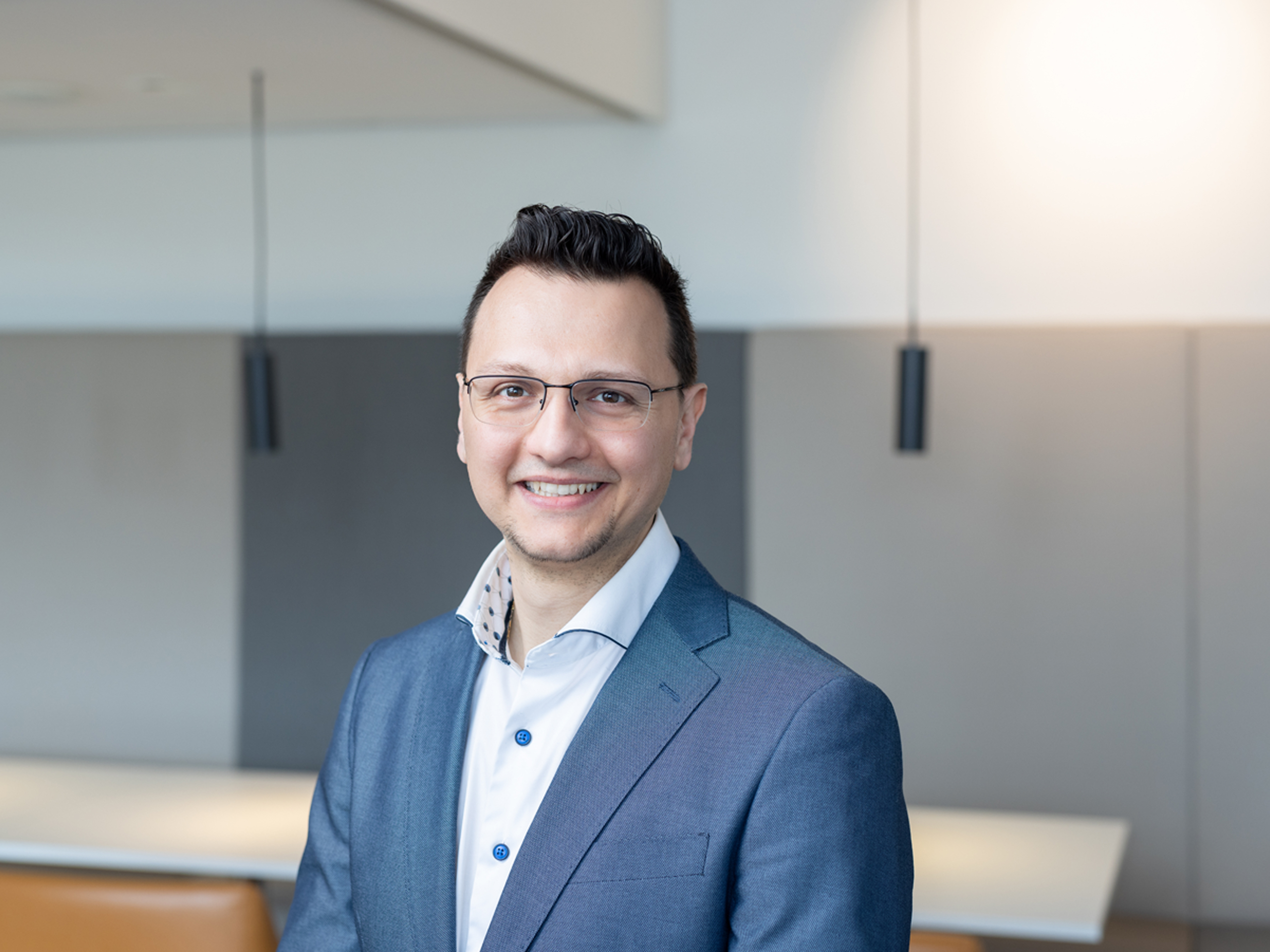
When a robot in a warehouse grips an object with a suction cup, the moment that matters most is the moment of contact, and at that instant, the robot is effectively blind. A camera may have shown what the item looks like in advance, but nothing tells the robot whether the grip is secure, whether the object is swinging, or whether it has accidentally picked up two things at once.
Alexander at TU Eindhoven has found a way to measure, continuously and in real time, how a soft, flexible body deforms as it is being used, without embedding anything inside it and without altering the cup itself. That matters because the cup is the part that wears out and gets replaced constantly, so building sensors into it would be impractical. From those deformation measurements, the forces acting at the very point of contact can be reconstructed: information that until now was either unavailable or could only be approximated from sensors mounted far from where the contact actually happens. The invention is protected by a pending international patent.
Gentler robots
The societal stakes are real. Online ordering has outpaced the workforce willing to handle it, and robots without a sense of touch are careless: they drop items, damage them, or grab more than intended. Each failure carries an economic and environmental cost. Giving robots the ability to feel what they hold makes automation both more dependable and gentler, cutting errors and downtime in a sector where margins are thin and labour is scarce. And for workers in these environments, it means machines that can take over physically punishing work without being so rough that someone has to follow behind them. Alongside logistics, Alexander sees other opportunities in agri-food and electronics handling, for instance.
The technology is at TRL 4, working reliably under lab conditions deliberately designed to resemble a real installation. In two years, Alexander wants smart grippers running at customer sites alongside robotic system integrators (the companies that design and build automated picking systems) and to be starting commercial sales.
Sense of urgency
The programme came at the right time for Alexander because he came to the conclusion that by staying in the lab he could not have the real-world impact he wants: “Automating hard repetitive work properly frees people from jobs most of them do not want. That is worth more to me than another publication.” Also, the timing is right since there is a sense of urgency in the industry that makes them actively look for new technologies.
You have to move from being a scientist to being an entrepreneur, and that is not a change of job title: it is a change of reasoning
The programme has reshaped how he thinks. “You have to move from being a scientist to being an entrepreneur, and that is not a change of job title: it is a change of reasoning,” he says. “As a scientist, you are trained to trust the data. You do not commit until the evidence is there. An entrepreneur almost never has that luxury. You make consequential decisions on partial information, most of the time, and you have to be comfortable doing it.” He likens it to chess: thinking several moves ahead and then committing, knowing you cannot see the entire board.
Glad to share it
“The biggest thing I have gained is confidence,” he reflects. “As a scientist I was always afraid of becoming an entrepreneur, precisely because of the uncertainty involved. That fear is what kept me in the lab. The programme is what showed me I can actually handle this.” What makes it work is how hands-on it is. The trainers are excellent and the programme is genuinely well designed.
Alexander hopes to acquire the skills to run a company, not just build the technology inside it. And for him, suction grippers are just the start; he is in it for the long run. He brings valuable industrial experience to the cohort: product development, customer pilots, safety and CE certification, branding and marketing, and the day-to-day reality of making a robotics start-up function, and he is glad to share it.
Alexander is one of four new Faculty of Impact fellows we are introducing this month. Their fields could hardly be more different: solar optics, perovskite diagnostics, robotic touch and quantum timing. Yet all four are driven by the same conviction: that science earns its fullest meaning when it leaves the laboratory and reaches the people who need it. Meet Lisanne Einhaus, Agustin O. Alvarez and Louis Gallagher.

