‘If something works, let’s build on it’
April 2, 2026
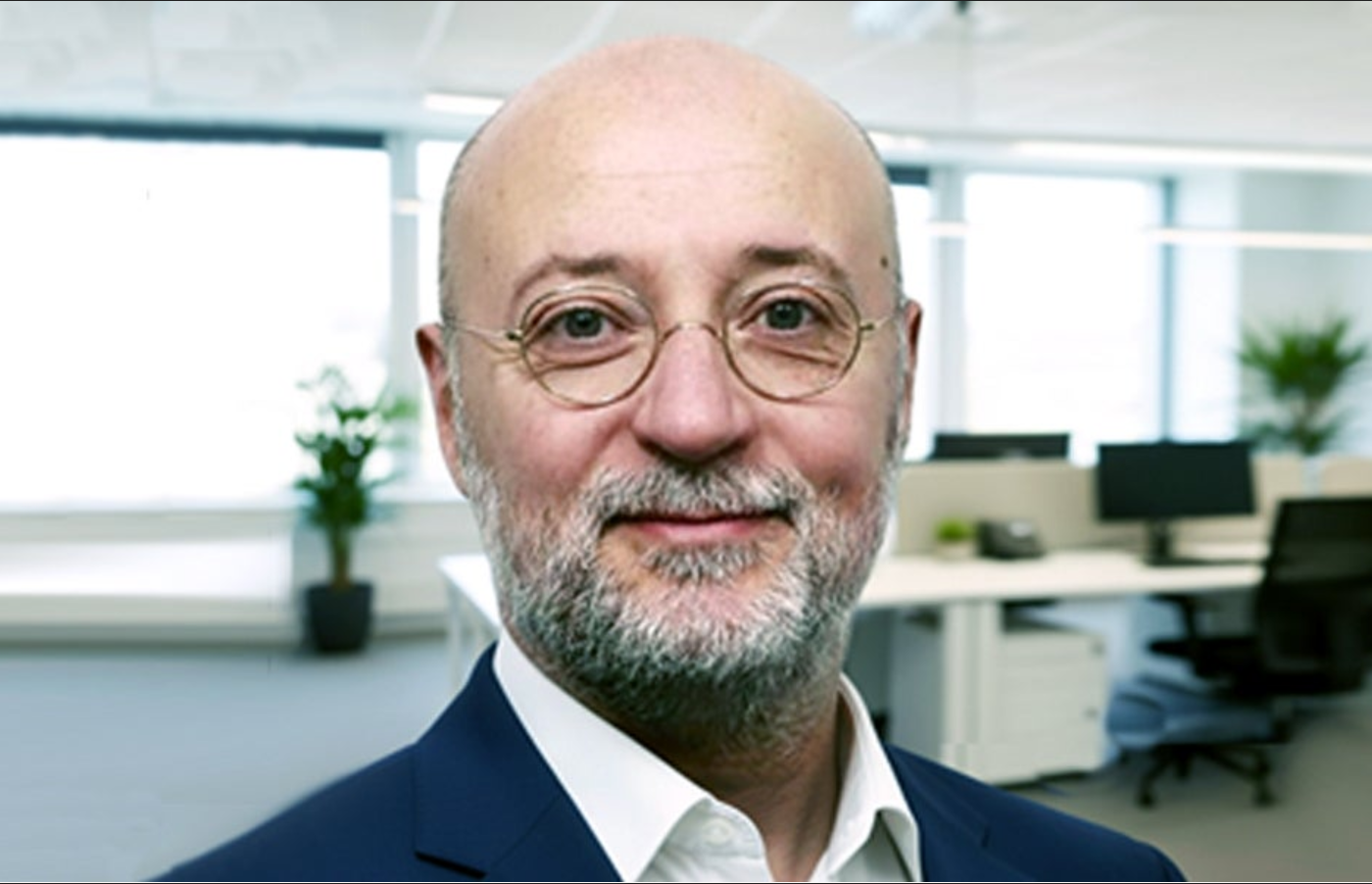
‘Impact professor’ Davide Iannuzzi is a big fan of the programme
There are several ways to improve the innovation landscape in Dutch academia. ‘We don’t need to wait for all stakeholders to come up with one shared, comprehensive vision’, Davide Iannuzzi, professor and Vice-Dean of Research at VU University Amsterdam, states. ‘There are initiatives in all sorts of places that have already proven their worth. Let’s scale them up and link them together more effectively.’
He considers it his mission to increase the impact of scientific research on society. Fostering an entrepreneurial spirit among academics is one of his favourite tools in this regard. It is therefore no surprise that several years ago, Davide Iannuzzi approached Technology Foundation STW, predecessor of the Applied and Engineering Sciences domain at NWO, with a plan. ‘Shouldn’t we be working towards a new kind of PhD trajectory that focuses entirely on entrepreneurship?’, he asked the then director, Herry Nijhuis. ‘So, alongside the existing programme, which is mainly about research, an alternative route that focuses on what they actually bring to society?’
As it happened, at that very moment Nijhuis and NWO were involved, together with organisations such as Techleap and the Universities of the Netherlands (UNL), in creating a new grant for entrepreneurial researchers, modelled on a US example. When the Faculty of Impact was launched in 2022 as the result of that quest, Nijhuis rang Iannuzzi with the good news, referring back to that earlier conversation. ‘Of course, I was just one professor at one university who had an idea, but I like to think that I played my tiny little part in the establishment of this wonderful instrument.’
He sees it as entirely positive that the Faculty of Impact focuses primarily on a slightly different target group than he originally had in mind himself, namely the postdoctoral phase. ‘That might actually make even more sense. The most important thing was that I wanted, in some way, to promote entrepreneurship as a means of bringing research to society. And that’s exactly what the Faculty of Impact is doing.’
‘Once a concept works, surely it’s only right to make the widest possible use of it’
Intersection of research and entrepreneurship
Iannuzzi’s eyes radiate a passionate kind of fanaticism whenever a conversation turns to the intersection of research and entrepreneurship. Hardly surprising, as it is precisely at that intersection that his working life has always unfolded. As an experimental physicist, Venice-born Iannuzzi was appointed professor in the department of Physics at VU University Amsterdam in 2013. Two years earlier, he had founded the start-up Optics11 based on an innovative optical fibre technology he had developed himself. Ever since, he has been sharing the experience gained from this through his own consultancy firm. In 2022, as Chief Impact Officer at VU Amsterdam, he was given responsibility for strengthening the social, economic and scientific impact of research. Since the beginning of this year, he has been Vice-Dean for Research at VU Amsterdam. ‘Davide uniquely combines research experience, innovative strength and connective leadership’, his university stated when he took up the post.
Actions speak louder than words
Across all these different roles, one clear common thread emerges: nurturing entrepreneurial talent at universities. Preferably through steps that are as concrete as possible: not by talking about it, but by doing it: actions speak louder than words. ‘Don’t expect me to come up with some grand, overarching vision of how we can stimulate valorisation across the country. I’m not that sort of person. We can talk about it endlessly in large groups and come up with the most fantastic strategic plans. But at the end of the day, we’re left with a splendid PDF file – and then nothing happens. I firmly believe in taking small, but real steps by actually trying things out. Some will die, some will grow, some will merge. If we see that something works, let’s build on it. A bit more budget, scaling up, replicating it elsewhere.’
‘We need to find a way to support universities in setting those up and supporting them throughout the programme’
Organic growth, ‘the entrepreneurial way’ – that’s what he believes in. ‘People with ideas want to get started and not waste too much time in the talking circles. What’s more: if you want to overhaul the entire system based on a broad new vision, you’re bound to come up against people who want to defend existing interests. If you do it step by step, using examples that have themselves already proven successful on a smaller scale, you’ll get people on board much more easily. Then, at a certain point, those established stakeholders will also be given a choice: you’re with us, or you’re out. ’
Supporting innovators
One example of such proven success is his own Demonstrator Lab (DLAB) at VU. ‘A very, very early-stage incubator’, as he describes it. No matter how premature an idea may be, or who comes up with it (DLAB is open to all students, researchers and staff at the university), innovators receive support as they take their first tentative steps towards entrepreneurship. Of course, not every idea makes it to market, but dozens of start-ups have already emerged from it. A new idea that he is already putting into practice on a small scale is the (voluntary) addition of an ‘impact chapter’ to the PhD thesis. ‘Elaborate on what your research project could mean for society, turn it into a business plan and include that in an extra chapter of your thesis.’
Ideally, he would like to see initiatives of this kind expanded nationwide. ‘Take DLAB, for example – how wonderful would it be if we could develop that into a common brand across the country. And then hold a major annual event featuring all the new creative entrepreneurs presenting their projects. It’s not about the name or the DLAB brand itself. Other institutions are free to adapt things to their own circumstances. I’m open to all sorts of compromises. I also realise that some initiatives fail to gain traction due to issues such as competition between institutions. You always have to deal with territorial instincts or the ‘not invented here’ syndrome. But once a concept works, surely it’s only right to make the widest possible use of it?’
‘People with ideas want to get started and not waste too much time in the talking circles’
Removing obstacles
In his view, this also applies to the Faculty of Impact. Given his own involvement – Iannuzzi is a member of the advisory board and the selection committee -, he acknowledges that he may be somewhat biased, but he is a big fan of the programme. ‘It’s a lot of fun to be part of this. It’s a great team, and it’s fantastic to see all those young people with brilliant ideas on the selection days. We can persuade more academics to choose the entrepreneurial path by removing as many obstacles as possible. And that is exactly the principle of the Faculty of Impact. Of course, it gives you the training, the support, the network, the contacts, but first and foremost, it helps you to pay your bills for two years. That lowers the bar big time to take this exciting step.’
The fact that the Faculty is already a national initiative offers significant advantages, Iannuzzi points out. The next step is to scale up. ‘To start with, I’d say: double the budget. That’s something I’d easily sign for. If we want to do more than that, we would need some discussions. But without any analysis, I’d say double it straight away.’
Aligning the funnel
At the same time, he finds it crucial to nurture the funnel. ‘At Faculty of Impact, we really want great projects, and we need to find a way to support universities in setting those up and supporting them throughout the programme. For this, we should make use of all the great initiatives at individual institutions, especially if we can expand and coordinate them from a national control room. For example, imagine we had a national program that helps PhD candidates write the entrepreneurship chapter in their PhD thesis I mentioned. Each of these chapters could serve as the basis for a project at the Faculty of Impact, which is already operating at the national scale. Imagine that every university had a DLAB, too. That would be the perfect place for future Faculty of Impact fellows to develop their ideas. If we can align those initiatives with the Faculty of Impact, I bet we can at least double the number of successful startups that universities produce. If the Dutch government, in coordination with UNL and NWO, establishes a common definition of success, assigns a clear mandate to a robust central team, and provides financial commitment, this project could start tomorrow.

