Meet three of our fellows driving breakthrough innovation
18th of December 2025
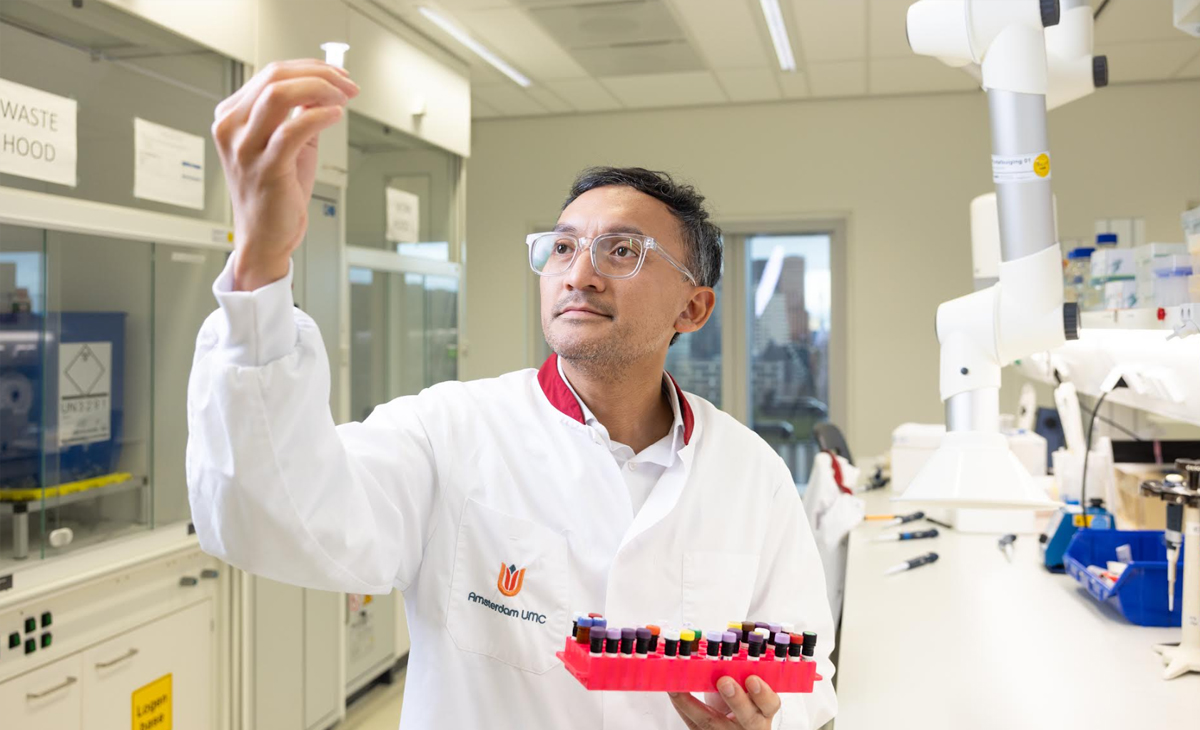
This April, three remarkable researcher-entrepreneurs joined the Faculty of Impact with bold visions to transform their scientific breakthroughs into real-world impact. From next-generation cancer therapies to sustainable flame retardant materials, these fellows are tackling some of society’s most pressing challenges, and they are doing so with ambition, creativity, and a strong entrepreneurial drive. Meet Amber, Alsya and Ali.
Amber Wezenaar – Advancing T Cell therapies for solid tumors
Solid tumors remain one of the most difficult forms of cancer to treat. Amber Wezenaar from Prinses Maxima Center is developing novel engineered T cell therapies designed to dramatically improve the way these cancers are targeted and destroyed. Her team enriches for T cells with superior tumor killing capabilities, creating more consistent and effective engineered T cell therapies that could benefit a wide patient population.
Currently at the preclinical stage, Amber is validating her first therapy and preparing the foundations for a future venture. In two years, she aims to have launched her company, secured private funding, and started preparing the regulatory dossier for clinical trials.
For Amber the Faculty of Impact program is the right match: “We now need a strong business model to raise the funding necessary to bring our therapy to the clinic.”
She values the program’s blend of hands-on and theoretical training, the coaching, and the strong peer support network, especially important in the often lonely entrepreneurial journey. She hopes to strengthen her leadership and fundraising skills, while contributing her experience in translating complex science into clear, compelling stories for her peers and offering them a fresh perspective since most are from other sectors.
Alsya Affandi – Harnessing nanobody technology for smarter cancer immunotherapy
Alsya Affandi, Amsterdam UMC, is on a mission to push immunotherapy forward. Using innovative nanobody technology, he aims to direct a patient’s own immune system more precisely against cancer, resulting in a reduction of side effects while increasing effectiveness.
His work is in the early preclinical stage, and the team is validating their first indication. Looking ahead two years, he hopes to deliver solid proof-of-concept data, secure funding, and prepare for manufacturing and clinical studies.
Alsya is ready for his startup journey: “With our patent recently published, I’m in the best position to build the entrepreneurial skills needed to bring this technology to the clinic.”
During the first weeks of the program, Alsya has already learned how different the entrepreneurial mindset can be, from understanding what matters in startup building to communicating with diverse stakeholders. Guidance from coaches and support from current and previous FoI cohorts have been very valuable. He is eager to grow into a founder capable of navigating strategic decisions that bring his therapy closer to patients. And in return, he is happy to share his network and experiences with peers and fellow scientists exploring entrepreneurship.
Ali Elahinik – Turning microbial biopolymers into sustainable flame retardants
Every day we rely on microorganisms to brew beer, produce medicine, or clean wastewater, so why not use them to fight fires? Ali Elahinik from TU Delft is doing exactly that. At “BioFire,” he is developing a flame retardant made from bacterial biopolymers derived from organic waste. The result: a sustainable, non-toxic, circular alternative to the harmful and expensive flame retardants used today. That can be used in many industries from construction to transportation.
Ali’s technology has already shown functionality in the lab and at pilot scale (TRL4), the core patents are filed, and early industrial partnerships are forming. Over the next two years, he aims to optimize extraction, certify the product, establish the value chain, and secure early paying adopters.
For Ali, joining the Faculty of Impact came at just the right moment, after finishing his PhD and reaching a critical “translation bottleneck”: “The science was ready for a commercial push. I always also liked the startup idea because it can bring underutilized ideas (which are piled up at the universities) to society at a faster turnover”.
His first impression of the program: strong networks, practical tools, and a community of peers facing similar challenges. The program helped in showing the opportunities but also teaches him where to start. He hopes to deepen his understanding of market validation, regulatory risks, investor communication and financial discipline. In return, he brings a concrete example of science becoming a startup, plus a healthy habit of challenging assumptions. And who knows, he jokes, maybe he’ll even come back as an investor one day.
A Cohort full of drive, discovery and purpose
Amber, Alsya and Ali embody the spirit of the Faculty of Impact: transforming high-potential research into scalable solutions that improve society. Their journeys are only just beginning, but their ambition is unmistakable, and we are excited to support them every step of the way.
Stay tuned for more updates as these fellows continue to turn breakthrough science into real-world impact.

