‘You need a plan bigger than tech’
June 3, 2026
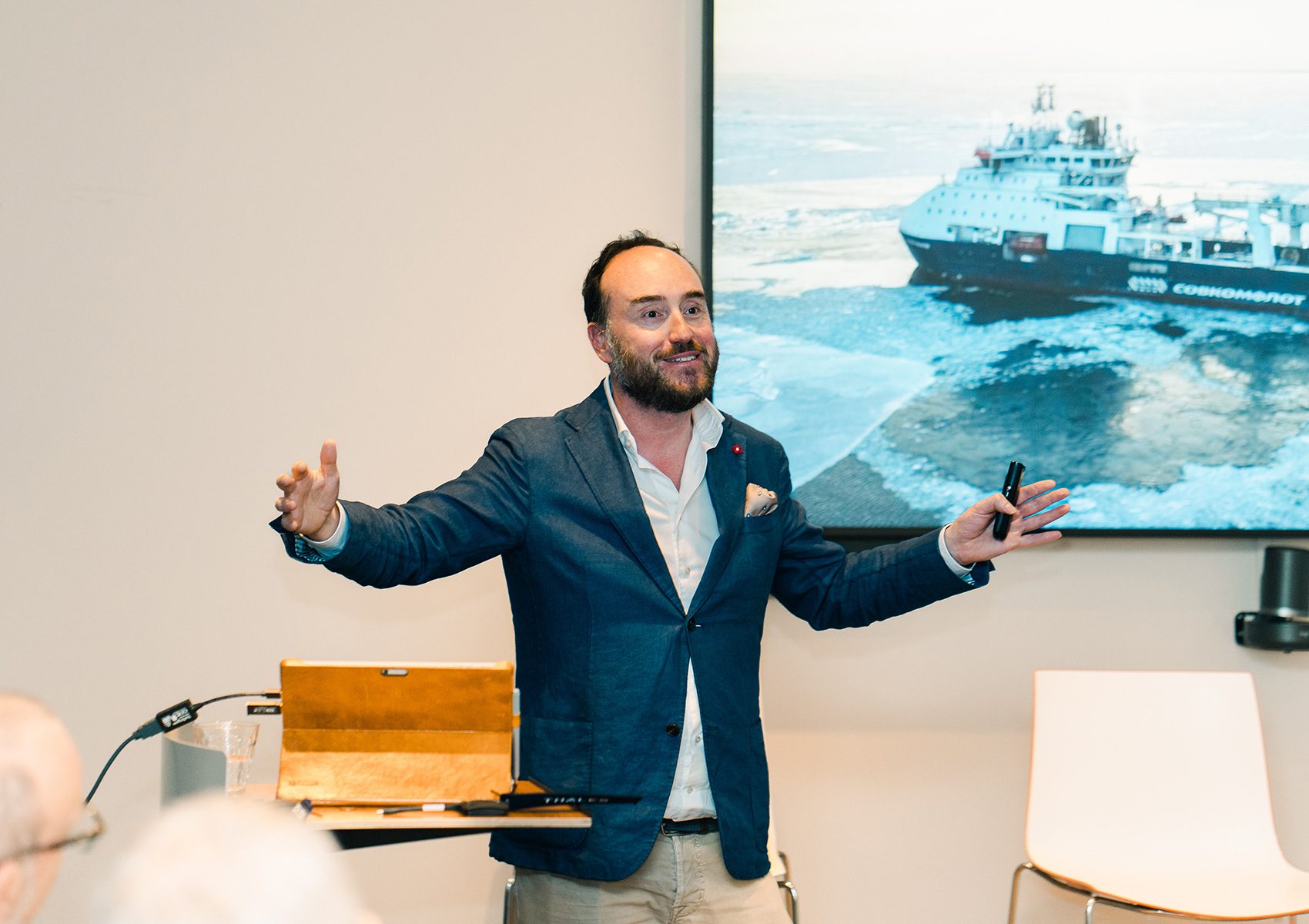
David Cerda Salzmann shares his experience as entrepreneur and angel investor
He was one of the founders of a highly successful start-up that grew into a thriving business. After the sale, he chose to use part of his capital to act as an angel investor, giving exciting new ideas a chance to reach the market. But above all, David Cerda Salzmann enjoys using his knowledge and experience to mentor new start-ups. How does he see himself? Is he a techie, an entrepreneur? Perhaps more of a coach, or an investor? ‘I’m a people person. Eager to learn, but also to teach and share my experience.’
[featured photo: Mariska Staal]
The disappointment was immense. David Cerda Salzmann and his team could scarcely believe that they hadn’t even made it into the top ten in a business plan competition, despite having submitted such a brilliant idea. What a let-down! As they walked away sulking, one of the organisers came running after them. The jury did indeed think it was a promising idea; they just hadn’t written it down properly.
Appeal to your market
It’s an anecdote that David still loves to share. It encapsulates one of the most important lessons about entrepreneurship he ever learnt: you need a plan bigger than tech. ‘If you want to build a business, you have to learn what it means to think like an entrepreneur. You must find out how to appeal to your market. If you start straight away with all sorts of technical jargon, you’ve already lost at least half your audience. And yet that’s what we engineers usually tend to do: go on and on about how cool our technology is. Honestly, nobody cares. Unless you’re talking to a fellow techie, someone in the same field, it’s just not that interesting.’
Our pitch was rubbish
A year later, they won the competition. With the same idea, but a completely different story. About how important offshore wind energy was becoming (we’re talking about the start of this century – ed.), but how complex it was to repair broken wind turbines out at sea. After all, they work so well because it’s often very windy at sea, but that goes hand in hand with rough waves. To enable a safe transfer from a wildly rocking ship, David Cerda Salzmann and Jan van der Tempel – the inventor and fellow PhD student at Delft University of Technology – developed a special hydraulic access platform which, based on a flight simulator, can compensate for the ship’s movements. Whereas the original pitch focused on the technology, they could now explain in plain language exactly which problem they would solve for the market and society. ‘The penny had dropped. We understood exactly why we hadn’t won before: our pitch was rubbish. We had described a technology, not a product or service.’ The rest is history. The plan led to the highly successful company Ampelmann, founded in 2007 and sold to a private equity firm in 2013.
“If you start straight away with all sorts of technical jargon, you’ve already lost at least half your audience”
Academic gems
More than ten years later, David is a seasoned entrepreneur, coach and angel investor. He first learned about the Faculty of Impact at last year’s investors’ event. As part of their training, the fellows had the opportunity to pitch their plans to a group of potential investors in brief individual meetings. ‘For me it was a very nice day’, he recalls. ‘I had some great conversations, my feedback was appreciated, and everyone was eager to learn. You could clearly see that these were people who know a lot about their field. Real academic gems who are being pushed to step out of that ivory tower of science. But who were perhaps being confronted with the business side for the first time. Some adapt quickly, whilst with others, you can tell they’re still in the middle of that transition. They’ve still got a few hurdles to clear. That makes sense: techies don’t fully transition into business people overnight. You have to learn what to present and what not to, and when it’s better to keep your expert side under wraps.’
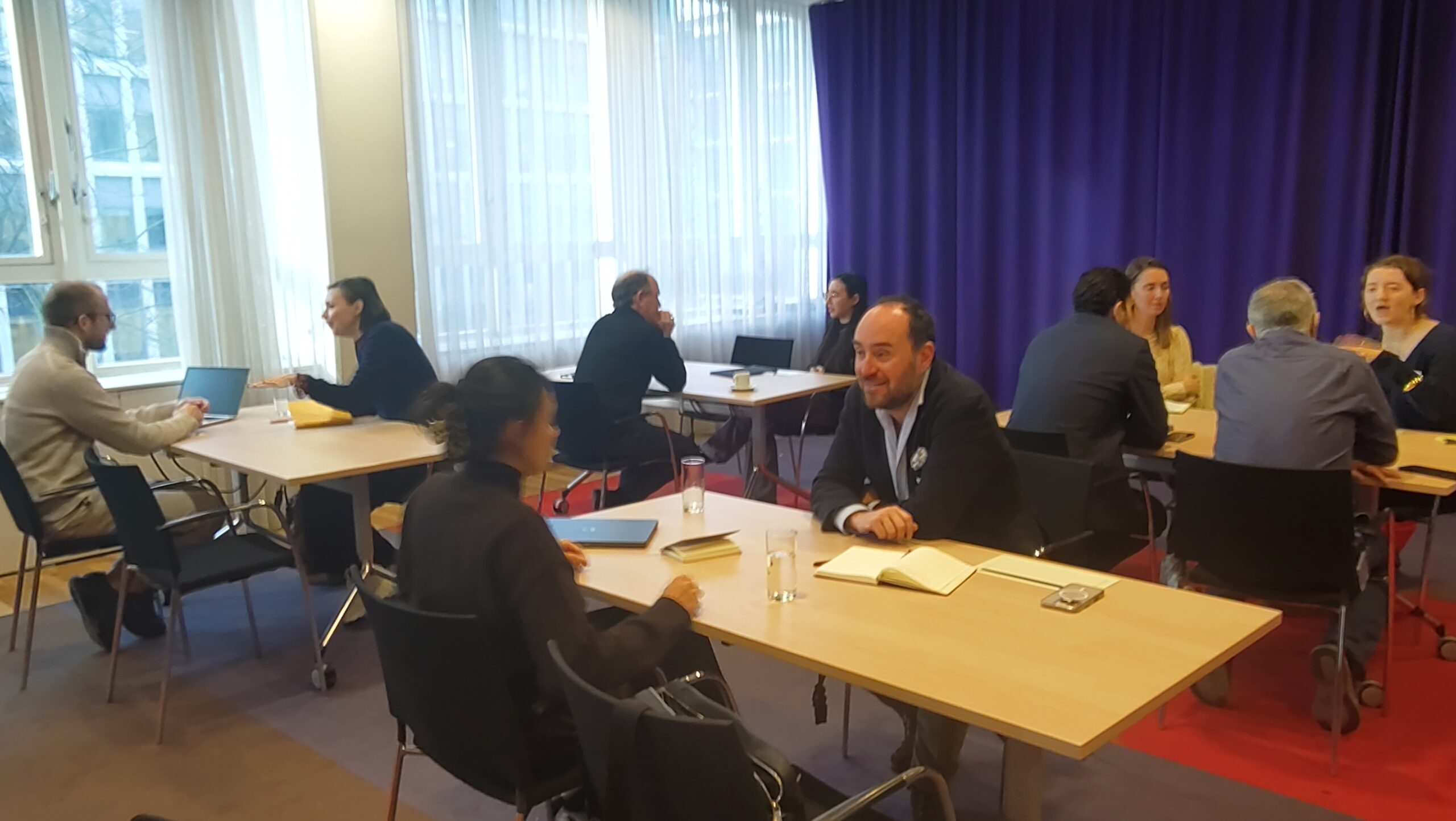
David Cerda Salzmann at the Faculty of Impact Investor Event: ‘You could clearly see that these were people who know a lot about their field. Real academic gems who are being pushed to step out of that ivory tower of science’
From nerd to business-savvy
And that’s exactly what David loves doing: helping others make that transition. ‘I’ve been through that whole process myself. I had to make the complete shift, from nerd to business-savvy. It’s not too difficult, but you do have to be open to it. And to be honest, it took me quite a while to understand how to put together a good business plan. To really see how a company makes its money. How to be a good engineer – you’ve been working on that for years, that’s not the issue. But being a good entrepreneur requires a range of other skills. When I started thinking about that, a whole new world opened up for me.’
“Techies don’t fully transition into business people overnight”
He realises how lucky he and his business partners have been. Their professor gave them the freedom to experiment with their technology whilst working on their PhDs. And what’s more, they had an innovative idea, linked to an application. So he was introduced to entrepreneurship rather unexpectedly and unintentionally, even though during his PhD years in academia, it was certainly not considered a logical step. ‘I get the impression that nowadays, fortunately, this is somewhat more the case. However, I still see all too often that technology forms the starting point, with an application having to be devised later. That’s usually not how it works. Your product is only of any use if there is also demand for it.’
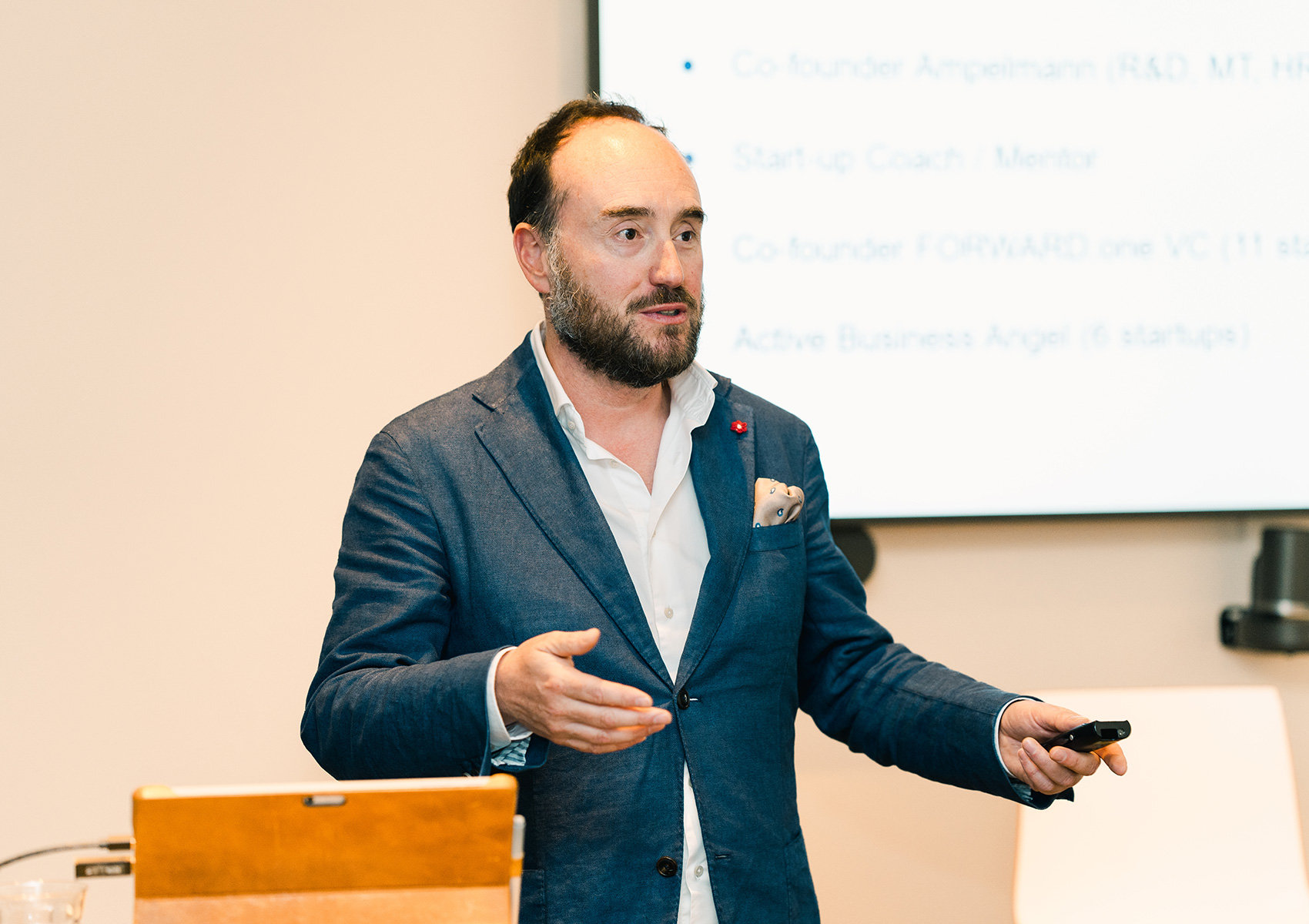
David Cerda Salzmann sharing his experience at the MNPX Leadership Day (photo: Mariska Staal)
Bringing good ideas to the market
David entered the world of investing primarily because of his role as a coach. He stepped in when he saw that one of the start-ups he was mentoring was running short of funds just before delivering a prototype. ‘After the exit, I had a bit of spare cash. Since I’d built up a good relationship with the founding team, I thought it would be great to give them just that little helping hand. I don’t do it primarily to invest, but because I want to help bring good ideas to the world. That’s how I got into angel investing.’ Together with others, he set up a venture capital firm FORWARD.one, but his role there was short-lived. ‘I soon realised it wasn’t the right fit for me. So I went solo again.’
“ASML is cooler than our national football team, and yet nobody’s flying their flag for it”
Proud of our entrepreneurship
He would also like to see more courage and conviction in the national funding policy. All too often, he sees excellent ideas come to nothing because proper funding cannot be found. His appeal is for the government to make clear choices about the areas in which the Netherlands wants to excel, and to take greater risks. That also involves a certain pride, he believes. ‘It’s all about mindset: “we want to become world champions in these fields, because this is what we’re good at. And we’re going to get even better at it. No one can take that away from us.” If you put it that way, you will get supporters; everyone wants to be part of it. I’d love to see the same pride you see around the Dutch national football team around our companies and industries, too. Offshore, greenhouse horticulture, maritime technology: all sectors in which we are global players. The average Dutch citizen knows nothing about it. Or take ASML, one of the most important companies in the world. It’s cooler than the football team, and yet nobody’s flying their flag for it. As long as nobody tells you that there’s a World Cup at all and that we’ve actually got a good team, nothing will happen. And then it remains difficult to convince people at a young age to choose a career as an entrepreneur.’