A soft landing in the market: beyond the funding gap
17th of December 2025
Investors collaborate with start-ups at Faculty of Impact’s Investor Event
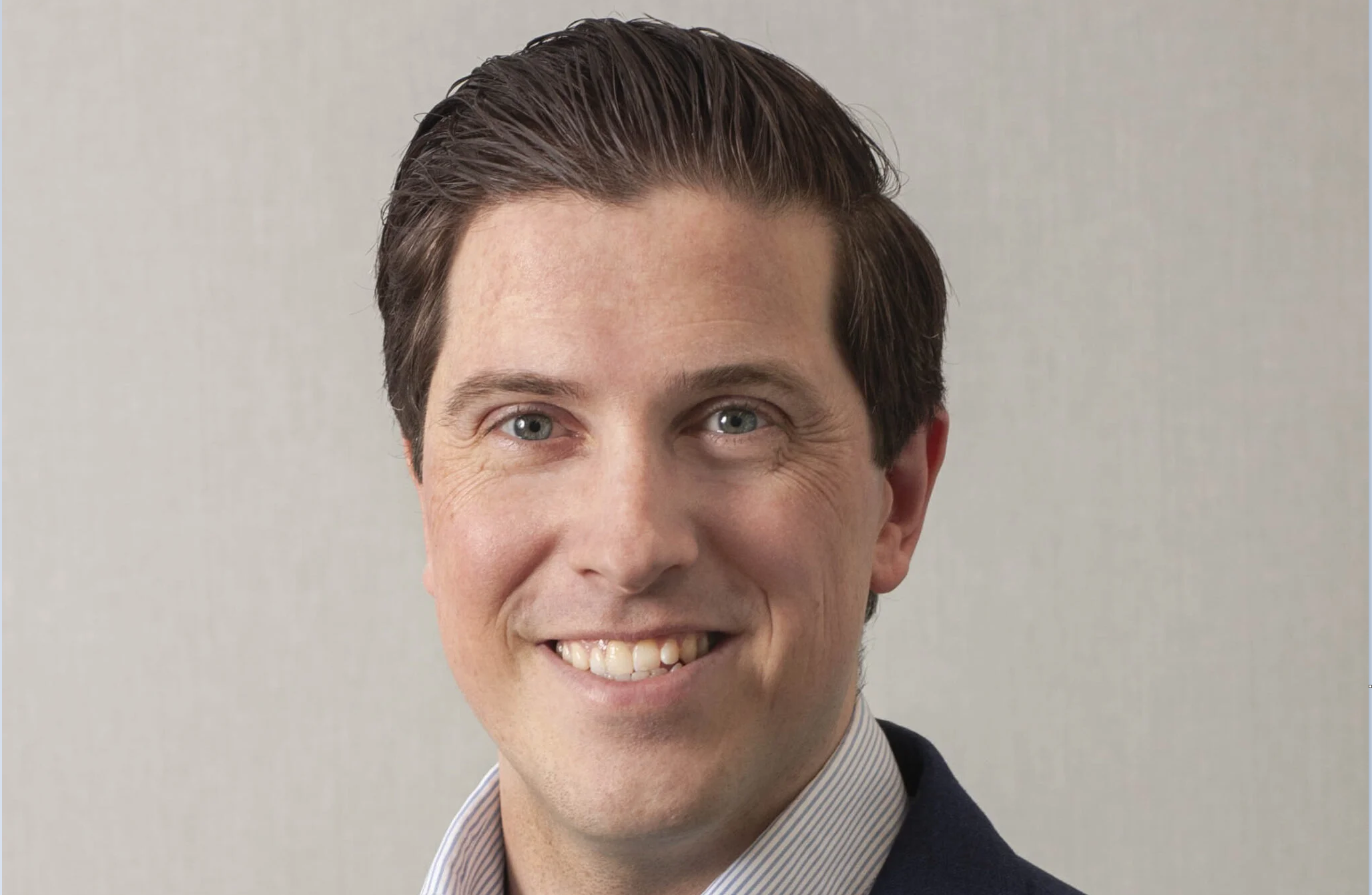
The Investor Event is a highlight in the Faculty of Impact’s curriculum. Ambitious start-ups pitch their plans to a panel of potential investors. Thom Frielink is one of them. With the Curie Capital investment fund, he supports Dutch early-stage companies in the life sciences sector. He shares his vision of the financing landscape and has some sound advice for young start-ups. ‘Statistically, the relationship we enter into lasts about as long as most marriages.’
As enthusiastic as he is about all the initiatives that help bring knowledge to market, Thom Frielink is equally concerned about the funding gap that he sees many young start-ups falling into. It is precisely in that crucial but uncertain initial phase that it is becoming increasingly challenging to raise sufficient funds. Investments from both the government and private capital providers are lagging. ‘The larger funds mainly focus on parties whose research is more advanced and already in the clinical phase. They prefer to invest a considerable amount of money in a limited number of companies to keep their portfolio manageable. This often involves financing rounds of 50 or 100 million euros or more. That automatically leads you to companies that are already a bit further along.’
Growing gap
This poses problems for companies that are still in the early stages. ‘Our fund invests in the seed phase, but always with co-investors. This allows us to finance the results needed for follow-up financing from larger funds. But there are currently few co-investors in this phase. For every start-up we invest in, we see hundreds of parties. There is no shortage of knowledge, expertise and good ideas; that is not the problem. But as a young start-up, you can be in for a rude awakening when you leave academia, the money runs out, and no one is interested, even though you really do have a good idea.’
‘Make sure you connect with an experienced mentor who has already gone through the entire process, from starting a business to an exit’
Of course, not every innovation will ultimately find its way to market; often, you have to conclude that something does not work or is not sufficiently developed yet. Frielink experienced this himself when he worked at the Eindhoven start-up 2ndB, a brain-on-a-chip company. What worked in the lab turned out to be a step too far in the real world, leading the researchers to conclude that it was too early for commercialisation. ‘It was an interesting experience that I wouldn’t have wanted to miss, but it was good not to pursue it unnecessarily. Of course, this happens very often. It’s also fine that there is such a natural cut-off. But I now have the impression that there is so little money available in the early stages that, even with good, workable ideas, it is difficult to find funding, which means promising innovations never leave the lab. Now that is a problem.’

Money for bridging the gap
The Faculty of Impact can help participants ease the transition from university to start-up. ‘It gives you a little extra time, because you get two extra years to develop your idea further. It softens the landing from academia to the private sector. A PhD or postdoc thus has the opportunity to focus primarily on that valorisation. People underestimate how much time and effort it takes. Too often, you see scientists focusing primarily on their academic careers and doing this on the side. But if no one really takes the lead and commits 100 per cent to it, even the most promising projects will stall.’
Frielink therefore considers the Faculty to be a valuable addition to the Dutch innovation landscape. An important step forward. Nevertheless, in his view, we can also learn from our neighbouring countries. ‘In Belgium, the Vlaams Instituut voor Biotechnologie (VIB) coordinates subsidies for research, with 12 per cent of the VIB’s entire budget focused on technology transfer. I think that’s a good example of how you can valorise knowledge from universities.’ In Germany, too, he sees how the Hightech Gründerfonds is investing heavily in early-stage biotech companies, including with government funding. In the Netherlands, he sees that several regional development companies are mainly driving pre-seed financing in the life sciences, but that there is often a gap for the first follow-up financing.
‘Even with good, workable ideas, it is difficult to find funding, which means promising innovations never leave the lab’
While he calls on the Dutch government to invest more, he also emphasises that he sees many good initiatives in the life sciences and health sector. ‘It is particularly important for medical technology to ensure that ideas are brought to market, because they are life-saving or life-prolonging, or at least can improve quality of life.
Involving experienced people
Perhaps that is why a striking number of fellows from the Faculty of Impact are active in the LSH sector. In mid-December, Frielink sat on the panel at the annual Investor Event for the third time. During an inspiring afternoon, the participants took potential investors through their plans and developments. ‘Every time, I see wonderful ideas that are technologically and scientifically very sound. Often, there is a lack of knowledge about product development and commercialisation, including the costs involved. That is also very difficult if you only have an academic background. That is why it is so important to involve good people in your start-up who do have the answers to those questions.’
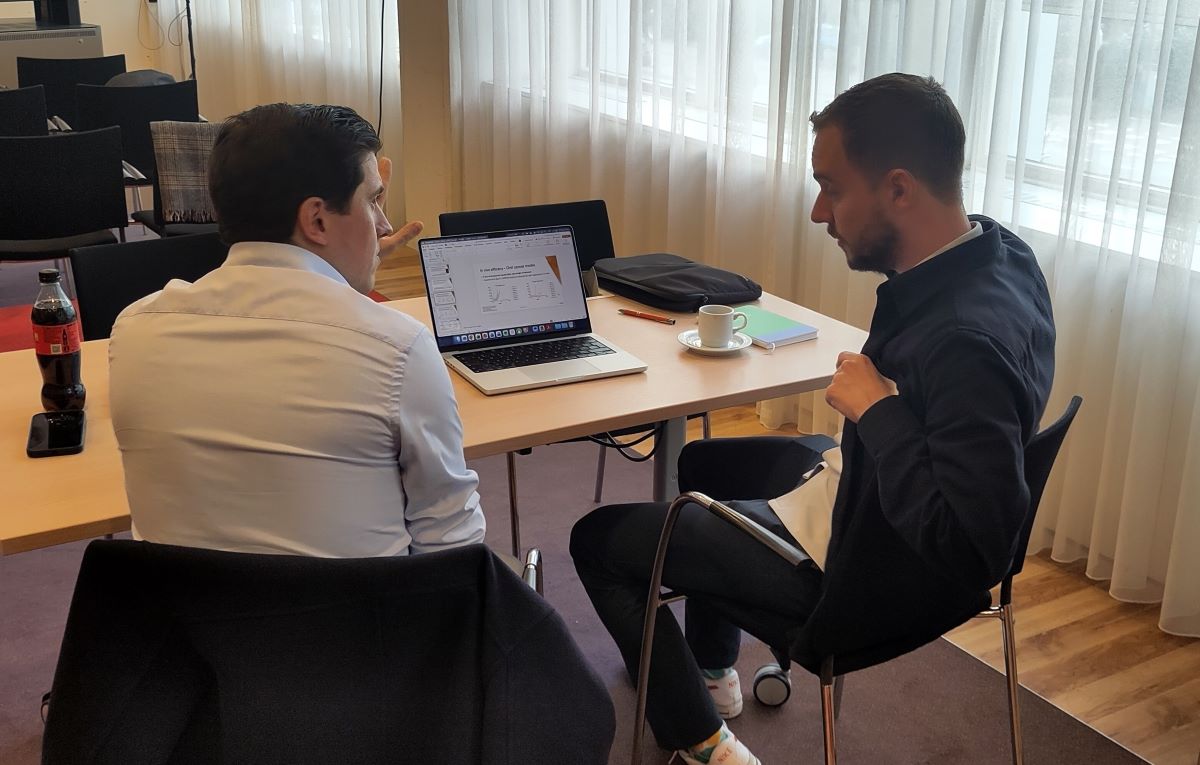
It is one of the main recommendations he gives to start-ups: make sure you connect with an experienced mentor. ‘Someone who is active in your field and understands the product you are developing is worth their weight in gold. Especially if that person has already gone through the entire process from starting a business to an exit. Such people can help you make adjustments and protect you from many missteps. No one knows exactly how things will turn out at the start. You will always make mistakes. But if you have someone with experience at your side, those mistakes will often be smaller and easier to recognise.’
Turn or move on
Frielink also advises entrepreneurs always to remain critical of their own business. ‘Always try to find new killer experiments with which you actively attempt to disprove your own hypothesis. Keep asking yourself whether your business is realistic. That is exciting and not always fun. But if you don’t do it, you run the risk of unwittingly walking down a dead-end road. It is better to turn around than to continue down a road that leads nowhere, when you could have known better.’
The trick is to strike the right balance in discussions with potential financiers. And that can be difficult, he acknowledges. On the one hand, you want to come across as convincing, but at the same time, you mustn’t sell unrealistic expectations. ‘When a fund invests in something, they enter into a relationship that statistically lasts about as long as most marriages. Investment funds often take on a role in a supervisory board, for example. If you hear a wonderful story in the preliminary discussions that doesn’t match reality, you’re off to a bad start in that investment relationship.’
‘It takes courage to make yourself vulnerable, but it helps you build mutual trust with your investor’
The more specific, the better. ‘We are going to do something in colorectal cancer, which is a twenty billion pound market’: that is not a pitch that excites him. ‘It tells me nothing about what you can do with your company. It is much more convincing if you say: “We focus on three thousand patients with this mutation, and this is the biological reasoning why our product can work better than anything currently available. We see a willingness to pay a tonne a year, so with our product, we are serving a market of up to 300 million.” Then we have a much better conversation.’
According to Frielink, presenting yourself as vulnerable from the outset always works best. ‘It takes courage, but it helps you build mutual trust with your investor. And that also applies when you reach a dead end. Be open about it. You learn from things that don’t work, and you can use that knowledge for something that might work. Involve us in that as soon as possible. Because the further you are in your development, the more difficult it is to change course.’

